Duopuli Plus and Duopuli Antioxidant Components and Their Application in Nasal Inhalation Smoking Cessation Devices: A Research Review on Synergistic Antioxidant Systems for Respiratory Mucosal Protection
Abstract
Smoking is a leading cause of oxidative stress, chronic inflammation, and various respiratory diseases. Free radicals, aldehydes, and tar components in tobacco smoke rapidly deplete the body's endogenous antioxidant system, particularly reducing levels of glutathione (GSH) and selenium (Se), directly leading to oxidative damage in the oropharyngeal and upper respiratory mucosa. This article aims to explore the synergistic antioxidant system under the concept of "Duopuli Plus" — namely, the application value of reduced glutathione and selenium sources (such as selenomethionine) in nasal inhalation smoking cessation devices and inhalable formulations. By analyzing the biochemical mechanism of the glutathione peroxidase (GPx) system, this article elaborates on the important role of multi-component synergy in scavenging free radicals, regenerating the antioxidant network (such as the recycling of vitamin C and E), and protecting the respiratory mucosa. Research indicates that introducing such synergistic antioxidant components into nasal inhalation auxiliary smoking cessation devices can not only provide behavioral substitution or nicotine replacement for smokers but also offer efficient localized antioxidant defense, reducing immediate oxidative damage caused by smoke, thereby providing a new technological pathway for health protection during the smoking cessation process.
Traditional Nasal Products
- Behavioral: peppermint, eucalyptol essential oils
- NRT: nicotine nasal spray
- No antioxidant function
- Lacks targeted oxidative protection
- Some products may irritate nasal mucosa
"Duopuli Plus" Antioxidant Formula
- GSH + Selenium synergistic antioxidant
- Localized high-concentration delivery
- Directly targets respiratory mucosa
- Bypasses GI degradation, high bioavailability
- Addable vitamins C/E for self-regeneration
1. Introduction
The health hazards of smoking have been widely recognized by the medical community. The complex smoke produced by tobacco combustion contains not only addictive nicotine but also thousands of chemical substances, among which the most destructive are large quantities of highly active free radicals (such as superoxide anions, hydroxyl radicals) and strongly oxidative aldehydes and peroxides. Once these substances enter the respiratory tract through the mouth and nose, they immediately react with biomolecules on the mucosal surface, leading to lipid peroxidation, protein denaturation, and DNA damage.
In this process, the body's endogenous antioxidant defense system is under tremendous pressure. Among them, the thiol tripeptide — reduced glutathione (GSH) is the most important non-enzymatic antioxidant in the human body, while selenium (Se) is an indispensable trace element for maintaining antioxidant enzyme activity. Smoking behavior significantly accelerates GSH consumption and reduces selenium utilization, forming a vicious cycle: oxidative stress intensifies → antioxidant reserve depletion → mucosal damage worsens → inflammatory response escalates.
Traditional smoking cessation methods mainly focus on behavioral substitution (such as using aromatherapy, essential oils) or nicotine replacement therapy (NRT). However, these approaches often overlook the oxidative damage that smokers face during withdrawal and the ongoing smoking process. In recent years, the concept of "Duopuli Plus" has gained attention, with its core being the design of a multi-component, multi-spectrum synergistic antioxidant system, utilizing the biochemical synergy of reduced glutathione and selenium to achieve precise protection and repair of the respiratory mucosa. The nasal inhalation smoking cessation device, as a convenient, non-invasive drug delivery route, provides an ideal carrier for this synergistic antioxidant system.
2. Core Antioxidant Components and Their Biochemical Mechanisms
The key to achieving efficient antioxidant protection lies in simulating and enhancing the body's own antioxidant network. Among them, the synergistic effect of glutathione and selenium is the core of this system.
2.1 Reduced Glutathione (GSH)
Glutathione (γ-L-Glutamyl-L-cysteinylglycine) is a thiol tripeptide composed of glutamic acid, cysteine, and glycine. It serves as the "hub" for maintaining intracellular redox balance.
- **Free radical scavenging**: GSH can directly neutralize various reactive oxygen species (ROS), such as hydroxyl radicals and singlet oxygen, converting them into more stable substances.
- **Detoxification**: Through catalysis by glutathione S-transferase (GST), GSH can bind with electrophilic harmful substances in tobacco smoke (such as aldehydes, quinones), forming water-soluble conjugates that facilitate their excretion.
- **Maintaining protein function**: GSH maintains intracellular reducing environment, preventing erroneous disulfide bond formation in proteins, thereby preserving the function of enzymes and structural proteins.
However, when coping with high-intensity oxidative stress (such as smoking), GSH is easily oxidized to glutathione disulfide (GSSG). If regeneration cannot keep pace with consumption, cells will fall into an oxidative crisis.
2.2 Selenium (Se) and Its Role in Antioxidant Defense
Selenium is an essential trace element whose position in the body's antioxidant defense is primarily reflected as the core active center of various selenoenzymes (such as glutathione peroxidase GPx, thioredoxin reductase TrxR).
- **Core of enzymatic reactions**: Selenium, in the form of selenoamino acids (such as selenomethionine) or selenides, can enter the active sites of proteins, endowing enzymes with powerful catalytic capabilities.
- **Bioavailability**: In antioxidant formulation design, using organic selenium (such as selenomethionine) typically offers better bioavailability and safety compared to inorganic selenium, enabling more effective participation in the antioxidant cycle.
2.3 Synergistic Mechanism of Glutathione and Selenium: The GPx Cycle
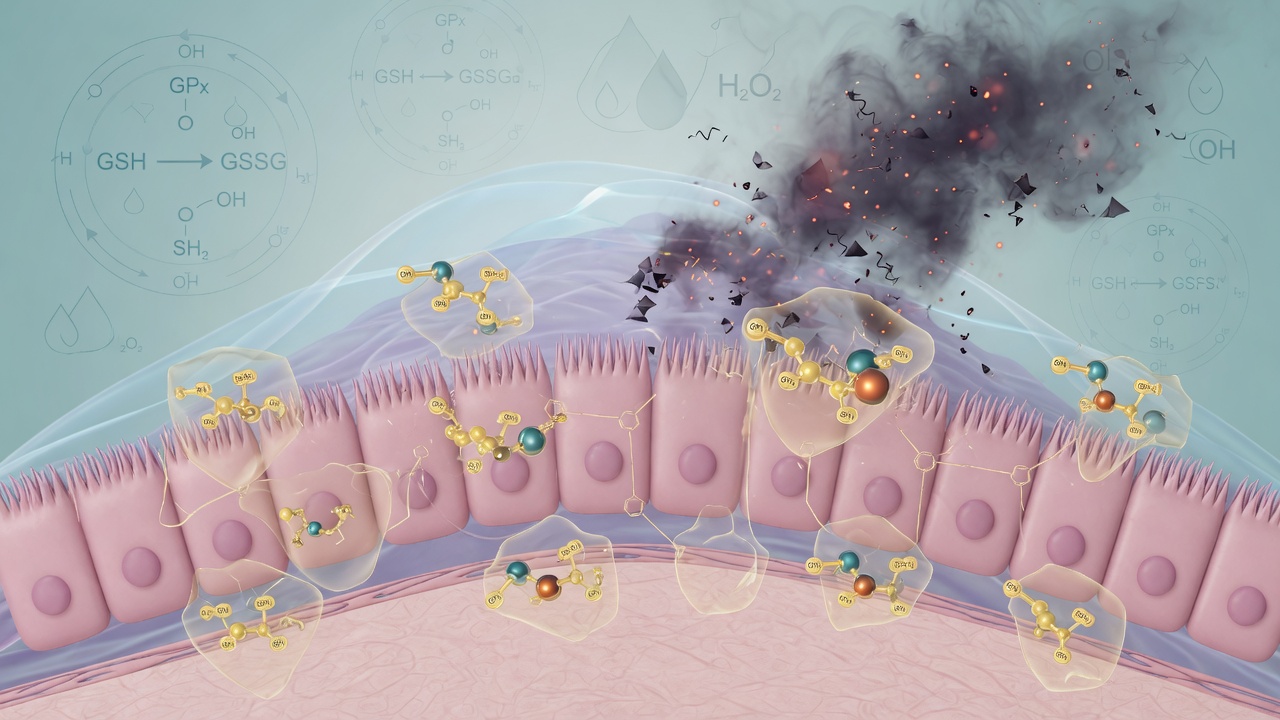
The scientific foundation of the "Duopuli Plus" system lies in the glutathione peroxidase (GPx) system composed of glutathione and selenium. This is a highly precise synergistic cycle:
- **Peroxide Reduction**: GPx uses GSH as an electron donor to reduce hydrogen peroxide (H₂O₂) or lipid peroxides (LOOH) to water (H₂O) or corresponding alcohols (LOH).
- **Selenium Catalysis**: In this process, selenium serves as a key component of the GPx active center, directly participating in electron transfer. Without selenium, GPx would lose its activity, and GSH's scavenging capability would be greatly compromised.
- **GSH Regeneration**: The reduced GPx needs to regenerate oxidized GSSG back to GSH. This process is catalyzed by glutathione reductase (GR) and depends on NADPH for reducing equivalents.
Furthermore, this system can work synergistically with other antioxidants to form a vast "antioxidant network":
- **Vitamin C (Ascorbic Acid)**: Can help reduce GSSG, or directly reduce oxidized vitamin E, thereby maintaining the cycling of GSH and vitamin E.
- **Vitamin E (α-Tocopherol)**: Primarily responsible for scavenging peroxide radicals in the cell membrane lipid layer, preventing lipid peroxidation chain reactions; its regeneration after oxidation depends on reduction by vitamin C.
- **Superoxide Dismutase (SOD)**: Converts superoxide anions into H₂O₂, providing substrate for the GPx system.
This "multi-spectrum" synergy ensures a complete defense chain from superoxide anions to peroxide removal and free radical scavenging.
3. Application Exploration in Nasal Inhalation Smoking Cessation Devices
Traditional nasal inhalation smoking cessation devices primarily function through olfactory stimulation (aromatherapy) or nicotine delivery. Introducing the "Duopuli Plus" antioxidant system opens up an entirely new dimension for the product.
3.1 Limitations of Traditional Nasal Inhalation Products
Currently available nasal inhalation products on the market mainly fall into two categories:
- **Behavioral substitution type**: Using plant essential oils such as peppermint, eucalyptol, and sandalwood to alleviate smoking urges through olfactory stimulation. Although safe, they lack targeted protection against oxidative damage caused by smoking.
- **Nicotine replacement type (NRT)**: Such as nicotine nasal spray. It effectively relieves withdrawal symptoms but does not possess antioxidant function itself, and some products may cause certain irritation to the nasal mucosa.
3.2 Design Concept of "Duopuli Plus" Antioxidant Nasal Inhalation Formulation
Introducing reduced glutathione and selenium sources into a nasal inhalation device aims to achieve the combination of "localized high-concentration delivery" and "synergistic efficient clearance."
- **Advantages of delivery route**: Through nasal inhalation or oral spray, antioxidant components can directly act on the upper respiratory mucosa and oropharynx. Compared to oral supplements, localized administration bypasses gastrointestinal digestion and degradation, achieving direct coverage and rapid penetration of damaged mucosa, significantly improving bioavailability.
- **Component optimization ratio**:
- **Golden ratio of GSH to Se**: The molar ratio of GSH to selenium source must be precisely controlled to ensure optimal activity of the GPx enzyme system at the moment of inhalation.
- **Synergistic additives**: Adding appropriate amounts of vitamin C, vitamin E, or L-cysteine (a precursor for GSH synthesis) can enhance the system's self-regeneration capacity, prolonging the duration of antioxidant effects.
- **Carrier and release technology**: Utilizing microencapsulation technology or specific aerosol carriers can control the release rate of GSH and selenium, prolonging their residence time on the nasal mucosa while reducing physical irritation to the mucosa.
3.3 Potential Application Scenarios
- **Auxiliary smoking cessation phase**: During smokers' attempts to quit, providing antioxidant protection through a nasal inhalation device to alleviate stress responses caused by withdrawal and protect damaged respiratory tissues.
- **Harm reduction and protection phase**: For groups choosing "harm reduction" products (such as heat-not-burn products), providing an additional antioxidant barrier to alleviate residual smoke's potential oxidative pressure on the mucosa.
- **Passive smoking protection**: As a portable personal protection measure, providing certain mucosal protection when exposed to secondhand smoke environments by inhaling antioxidant-containing aerosols.
4. Impact on Smoking Cessation Efficacy and Mucosal Protection in Smokers
Introducing the "Duopuli Plus" system is not merely a superposition of chemical components but an enhancement of physiological functions.
4.1 Alleviating Oxidative Stress-Related Psychological and Physiological Effects of Withdrawal
Research indicates that oxidative stress not only causes physical damage but also affects the central nervous system through inflammatory factors (such as cytokines), exacerbating anxiety, irritability, and mood swings during withdrawal. By efficiently scavenging systemic and local oxidative products, the synergistic antioxidant system may help stabilize the body's redox state, thereby alleviating some withdrawal symptoms at the physiological level and improving smoking cessation success rates.
4.2 Deep Mucosal Protection Mechanisms
- **Inhibiting lipid peroxidation**: Free radicals in smoke attack polyunsaturated fatty acids in mucosal cell membranes. Through the synergistic action of GSH and vitamin E, this chain reaction can be effectively blocked, protecting cell membrane integrity.
- **Reducing inflammatory response**: Oxidative damage is a trigger point for inflammatory responses. By reducing oxidative stress levels, the release of pro-inflammatory factors can be diminished, thereby alleviating inflammatory symptoms such as chronic rhinitis and pharyngitis caused by smoking.
- **Promoting tissue repair**: Selenium, as a cofactor for various enzymes, plays an important role in cell proliferation and repair. Selenium supplementation helps accelerate the regeneration of damaged mucosal epithelium, promoting recovery of damaged tissues.
5. Conclusion and Prospects
The design concept of "Duopuli Plus" and "Duopuli Antioxidant" marks a leap from mere "addiction control" to "health protection" in smoking cessation auxiliary products. By leveraging the biochemical synergy of reduced glutathione and selenium, constructing a complete antioxidant defense network not only directly neutralizes harmful free radicals brought by tobacco but also fundamentally supports the homeostasis and repair of the respiratory mucosa.
The nasal inhalation delivery system provides an efficient and precise implementation platform for this synergistic system. Future research should focus on the following directions:
- **Clinical validation**: Conduct large-scale, randomized controlled trials to verify the practical efficacy of GSH and selenium-containing nasal inhalation formulations in improving smokers' mucosal damage and increasing smoking cessation success rates.
- **Formulation optimization**: Explore more advanced synergistic components (such as novel selenoamino acids, nano-scale GSH carriers) and their optimal ratios to achieve more durable and stable antioxidant effects.
- **Safety assessment**: The long-term effects of prolonged use of such high-concentration antioxidant formulations on nasal mucosal physiological functions require rigorous evaluation.
In summary, the application of synergistic antioxidant systems in nasal inhalation smoking cessation devices presents a highly promising technological solution for addressing tobacco-related health issues, with broad market potential and significant social health implications.
This article is compiled based on existing antioxidant biochemical research and related patent technology concepts, intended to provide academic reference and technical insights.